

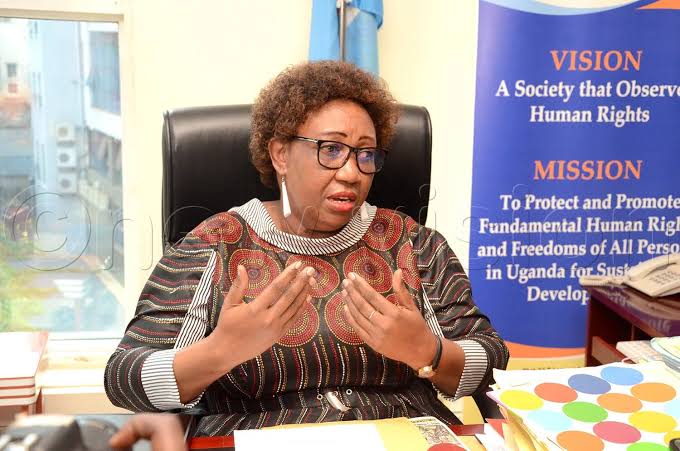
Recently, Uganda’s judicial and political landscape has been shaken by online smear campaigns targeting two prominent figures: Justice Musa Ssekaana, a judge in the Court of Appeal, and Hon. Mariam Wangadya, Chairperson of the Uganda Human Rights Commission (UHRC). These campaigns, mostly spread through certain media blogs, have painted both of them in a negative light. But the question arises: Why now? What lies behind the sudden focus on these two individuals, particularly Wangadya? Sources from Uganda’s political corridors suggest that there may be deeper, more strategic reasons behind the attacks.
The timing of the smear campaigns coincides with the ongoing search for a new Deputy Chief Justice (DCJ), a position that became vacant after Dr. Flavian Zeija was promoted to Chief Justice. The Judicial Service Commission (JSC) has officially launched the process of selecting a new DCJ, sparking intense lobbying and competition among senior judges, legal experts, and private lawyers who are eager to secure this influential position. While both Justice Ssekaana and Wangadya have not publicly announced their interest in the role, insiders believe they are both serious contenders.
A key aspect of the ongoing competition for the DCJ post is the lobbying from different factions within Uganda’s political and legal circles. Among these factions are influential Muslim leaders from the Uganda Muslim Supreme Council and the Kibuli-based Supreme Mufti leadership, who are pushing for the appointment of a Muslim lawyer to the position of Deputy Chief Justice. However, President Yoweri Museveni has reportedly emphasized the need for a candidate with a clean record, someone without ties to corruption. This has made the search for the right candidate challenging, as many of the potential candidates, including those from within the judiciary, have been mentioned in corruption reports.
Wangadya, a former Deputy Inspector General of Government (IGG) and current head of the UHRC, has become a standout candidate due to her anti-corruption credentials and strong leadership at the Commission. The president, reportedly, sees her as someone who could help clean up the judiciary. This potential has led to a series of coordinated attacks aimed at discrediting Wangadya. These attacks include a whistleblower report that alleges corruption and has been circulated to multiple media houses. The report was filed with the IGG’s office, the State House Anti-Corruption Unit, and the Police Criminal Investigation Department. Despite the lack of formal investigations, the report has generated significant online attention.
Why Target Wangadya?
Sources familiar with the situation suggest that Wangadya’s impressive work ethic and achievements make her a strong candidate for the DCJ role. As Chairperson of the UHRC, she has significantly improved the speed and efficiency with which the Commission handles cases, often delivering up to 20 decisions in just two days. In comparison, Court of Appeal justices are expected to deliver 20 decisions in four months. Her remarkable productivity and reputation for efficiency have made her a key figure in Uganda’s judicial landscape.
Another factor working in Wangadya’s favor is President Museveni’s apparent preference for appointing a female Deputy Chief Justice. This preference stems from his assessment of previous female DCJs, such as Justice Alice Mpagi Bahegeine and Justice Constance Btamugisha, whose tenures are remembered for strengthening Uganda’s appellate courts and for their international recognition. Critics of male DCJs argue that their leadership has contributed to a widening gap between the Bar and the Bench, leading to tensions that, for the first time in Uganda’s history, resulted in the exile of the President of the Uganda Law Society. These issues have created a belief that appointing a female Deputy Chief Justice might help restore balance within the judiciary.
In addition to her professional achievements, Wangadya has made powerful enemies due to her role in exposing corruption in Parliament. Her work in uncovering corrupt practices during the budget-making process led to the arrest of several members of Parliament, including Lwengo District Woman MP Cissy Namujju and Paul Akampa. Wangadya’s involvement in the case, while aiming to clean up the system, also resulted in the charges being dropped, which ultimately reflected poorly on the government’s anti-corruption efforts. This may have contributed to the current efforts to discredit her.
Justice Musa Ssekaana: A Controversial Figure
Justice Musa Ssekaana, another key figure in the ongoing judicial power struggle, has also faced criticism. Although many Muslim leaders were hopeful that Ssekaana would become Uganda’s first Muslim Chief Justice, his rise to prominence has been met with resistance. Detractors have leaked negative reports about Ssekaana to the Judicial Service Commission, and several complaints have been filed against him, reportedly pushing for expedited hearings as part of the DCJ appointment process.
The Kibuli Muslim leadership, in particular, has expressed discontent with Ssekaana over his handling of a case involving Juma Zukuli, where they accused him of bias. His decision to imprison Sheikh Khalifa Lutaaya and Sheikh Hassan Kinene for contempt of court has been a point of contention within the Muslim community. Moreover, Ssekaana has been criticized for his intolerance toward social media criticism and for getting personally involved in disputes during court hearings, further tarnishing his reputation.
The Deputy Chief Justice Appointment Process
The Deputy Chief Justice role is one of the most important positions in Uganda’s judiciary. Historically, President Museveni has appointed Deputy Chief Justices from among the justices of the Court of Appeal. Past appointees include Justice Geoffrey Kiryabwire, Justice Barishaki Cheborion, and Justice Egonda-Ntende. To be eligible for the position, candidates must hold a law degree, be serving as judges in the Court of Appeal, Supreme Court, or High Court, or have practiced law for at least 15 years.
According to sources close to the President, Museveni is keen on making the appointment soon, ideally before the start of the next term of office, to prevent any vacuum in the judiciary’s leadership. Additionally, the president has directed that local village leadership elections be completed by May 2026, signaling his push for swift decision-making.
As the race for the Deputy Chief Justice position intensifies, the smear campaigns against both Wangadya and Ssekaana have only escalated. These campaigns reflect deeper political struggles within Uganda’s judiciary, with both candidates emerging as central figures in the power dynamics shaping the future of the country’s legal system.
