Norbert Mao Pins Anita Among On Jacob Oulanyah’s Death!! Leaks Shocking Plan Behind

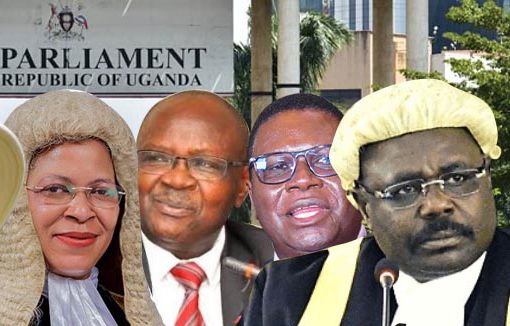
Justice and Constitutional Affairs Minister Norbert Mao has doubled down on his controversial description of Parliament’s leadership, reigniting debate by questioning whether there had ever been “a plan” behind the death of former Speaker Jacob Oulanyah.
Speaking amid mounting criticism, Mao defended his earlier remarks in which he referred to current Speaker Anita Among as an “accidental speaker,” a phrase that has stirred sharp reactions across Uganda’s political landscape.
Mao, who recently entered Parliament as the Laroo-Pece MP and serves as president general of the Democratic Party (DP), said his decision to contest the speakership race was driven by dissatisfaction with representation. He emphasized that his comments were rooted in principle rather than personal attack.

“I joined the race because I was not satisfied that I was being represented well,” Mao said, positioning his earlier bid as part of a broader concern about parliamentary leadership.
The controversy stems from Mao’s characterization of Among’s rise to the speakership following the death of Oulanyah, who served as Speaker from 2021 until his passing in 2022. After his death, Among—then Deputy Speaker and Bukedea District Woman MP—was elected by an overwhelming majority of legislators to take over the role.

Among has firmly rejected Mao’s label, pointing out that her position is the result of a democratic mandate. She has repeatedly noted that she was elected by more than 400 Members of Parliament, underscoring the legitimacy of her leadership.
However, Mao has refused to walk back his remarks. Instead, he has sought to frame the debate as one of semantics, insisting that critics have misunderstood his use of the term “accidental.”
“When I said we have an accidental speaker, I saw a lot of rage. But the answer is in the dictionary,” Mao said during a DP press conference. “If you open a dictionary, ‘accidental’ means ‘unplanned,’ ‘unintended’ unless they are saying there was an intention and there was a plan.”
He went further, posing a pointed rhetorical question that has since amplified the controversy: “So, was there a plan that the late speaker should die? Was that an intention?”
Mao argued that unless Oulanyah’s death had been premeditated—something he did not claim—the term “accidental” remains, in his view, an accurate description of the circumstances that elevated Among to the speakership.
Oulanyah’s death itself was surrounded by speculation and public debate at the time. Questions over the cause of death persisted, with his father alleging poisoning, while a former minister in President Yoweri Museveni’s government claimed that Oulanyah had previously confided fears of being poisoned.
Those claims were never conclusively substantiated, but they contributed to a climate of uncertainty and heightened scrutiny around the events leading up to his death.

Mao’s latest remarks appear to reopen those unresolved questions, while also sharpening political tensions between the ruling establishment and opposition voices. His insistence on the “accidental speaker” label continues to draw mixed reactions, with critics accusing him of insensitivity and supporters framing his comments as a literal interpretation of events.
As the debate unfolds, the exchange highlights deeper divisions within Uganda’s political sphere—where language, legitimacy, and the legacy of past leaders remain highly contested.