

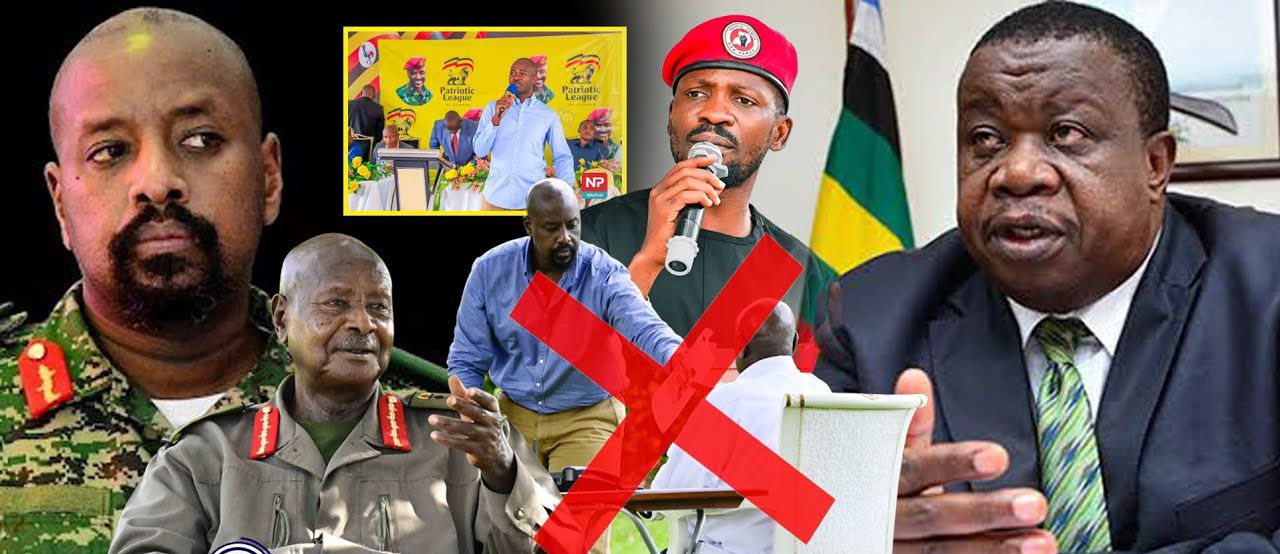
Uganda’s political landscape was further jolted after the Chief of Defence Forces, Gen. Muhoozi Kainerugaba, reportedly called for the arrest of Internal Affairs Minister Kahinda Otafiire in a fresh post on X.
The development comes amid an escalating public exchange between the two senior figures, which has reignited debate over political succession within Uganda’s ruling establishment. In his latest post, Muhoozi reportedly directed that Otafiire be arrested, intensifying tensions that had already been simmering following the minister’s outspoken opposition to the idea of a Muhoozi presidency.
The call for arrest marks a dramatic turn in what had begun as a war of words over the future leadership of the country. Otafiire, a veteran of the 1981–86 guerrilla war and a long-serving member of the ruling National Resistance Movement, recently reiterated that while he respects Muhoozi personally, he does not support him becoming president.

Muhoozi’s new directive, shared publicly, has triggered widespread discussion across political circles and social media platforms. Observers note that it is highly unusual for a serving Chief of Defence Forces to publicly call for the arrest of a sitting cabinet minister, especially one responsible for internal security matters.
As of press time, there had been no official communication from the Uganda Police Force confirming any move to detain Otafiire. Similarly, the minister had not publicly responded to the latest statement. The absence of formal clarification has left room for speculation about whether the remarks were symbolic, politically charged, or intended as a direct operational order.
Political analysts say the exchange underscores deepening strains within sections of the ruling party as the country gradually approaches the anticipated retirement of President Yoweri Museveni in 2031. Although no official succession roadmap has been unveiled, conversations about who might eventually lead Uganda have become more pronounced in recent years.
Muhoozi, widely seen by supporters as a potential future candidate, has cultivated a strong following both within military circles and among civilian backers. His critics, however, argue that public discourse around succession should be handled cautiously to avoid destabilizing state institutions.
Otafiire has previously maintained that his opposition to a Muhoozi presidency is rooted in principle rather than personal animosity. He has publicly stated that he has little to fear politically, citing his historical role in Uganda’s liberation struggle and his long service within government.
The latest developments raise broader constitutional and institutional questions. Under Uganda’s legal framework, the arrest of a cabinet minister would typically follow established investigative and prosecutorial procedures. Legal experts suggest that any such action would require clear grounds and adherence to due process.
For now, the situation remains fluid. Whether Muhoozi’s remarks will translate into concrete action or remain part of an increasingly sharp political exchange remains to be seen. What is clear, however, is that the debate over Uganda’s future leadership has entered a more confrontational phase, with senior figures openly challenging one another in public view.
As Ugandans watch closely, the unfolding events may prove significant in shaping both internal party dynamics and the broader national political conversation in the years ahead.
