Uganda’s political landscape is heating up as the race for Speaker of Parliament gathers momentum — and one of the country’s most powerful figures has chosen caution over commitment.
The Chief of Defence Forces, Muhoozi Kainerugaba, has revealed that he will not immediately take sides in the unfolding contest for the Speakership. Instead, he says he will first consult President Yoweri Museveni, signaling once again the central role the Head of State plays in key political decisions.
Speaking at a time of intense speculation and behind-the-scenes maneuvering, Muhoozi made his position clear:

“As for Speaker and all the other positions you are asking me about, I shall consult Mzee and get back to you,” Muhoozi said.
His statement effectively distances him from endorsing any candidate — including the incumbent Speaker, Anita Among, who is seeking another term.
A High-Stakes Political Contest
The Speakership is no ordinary office. As one of the most influential positions within Uganda’s governance structure, the Speaker presides over parliamentary proceedings, shapes legislative priorities, and plays a critical role in balancing political interests.

It is no surprise, therefore, that the seat has attracted a lineup of high-profile contenders.
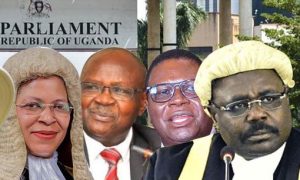
Among those who have declared interest are Lydia Wanyoto, Norbert Mao, and Persis Namuganza. Their entries into the race signal what analysts describe as a potentially competitive and closely watched internal battle.
Meanwhile, Anita Among’s bid for re-election has kept political corridors buzzing. Sources familiar with recent developments indicate that she recently met President Museveni at State House, seeking his backing for her candidacy. However, despite the high-level meeting, no formal endorsement was publicly announced.
Instead, the President is reported to have emphasized the importance of following established party procedures in determining the official candidate.
Endorsement Claims Disputed
In the days following that meeting, claims began circulating within political circles suggesting that Among had already secured the President’s endorsement. But those assertions have been challenged.
Senior figures within the ruling establishment have dismissed such reports as premature and lacking formal approval. According to some party members, any declaration of endorsement before the completion of internal consultations would be inconsistent with party processes.
With no definitive word from State House, lobbying efforts have intensified dramatically. Supporters of the various contenders are said to be holding consultations within party structures and across political alliances, each working to consolidate support ahead of the formal nomination stage.
The absence of a clear signal has left the race wide open — and unpredictable.
Museveni’s Decisive Influence
Muhoozi’s decision to defer to President Museveni underscores a political reality long understood in Uganda: the President’s voice carries decisive weight in matters of high-level leadership.

While the Chief of Defence Forces did not indicate any personal preference, his remarks strongly suggest that the President’s eventual position could significantly shape — if not determine — the outcome of the contest.
For now, Muhoozi remains non-committal, placing the decision squarely within the realm of consultation and hierarchy.
Corruption Named as Uganda’s “Biggest Problem”
Yet even as the Speakership contest dominates headlines, Muhoozi shifted attention to what he described as a far more urgent national issue.
He added that the biggest problem in Uganda right now is CORRUPTION and that it is the enemy that needs to be defeated.
“We must defeat corruption,” he stressed.
The forceful declaration taps into a long-standing national debate. Corruption has consistently ranked among the top concerns raised by citizens, civil society organizations, and policymakers. Questions of accountability, transparency, and public trust remain central to discussions about Uganda’s governance and institutional integrity.
By elevating corruption above political contests, Muhoozi reframed the conversation — suggesting that leadership battles must ultimately align with the broader struggle for cleaner governance.
What Happens Next?
As consultations continue and internal party deliberations unfold, the contest for Speaker remains fluid. Observers say the final direction will likely depend on several factors: behind-the-scenes negotiations, party consensus-building efforts, and most critically, the President’s eventual stance.
For now, no candidate holds a publicly confirmed advantage. The political chessboard remains in motion, with alliances forming and recalibrating by the day.
Uganda waits — watching for signals from State House, listening for further statements, and anticipating what could become one of the most defining internal political contests in recent years.
Until then, Muhoozi’s message is clear: consultation first, endorsement later — and corruption remains the real battle to be fought.