

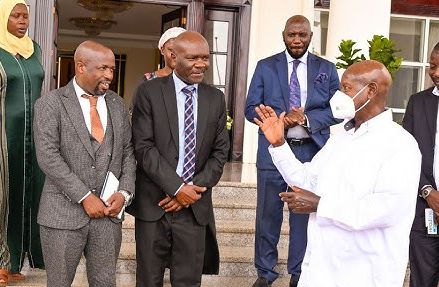
Outgoing Mawokota South Member of Parliament Yusuf Nsibambi of the Forum for Democratic Change (FDC) has ignited sharp debate within opposition circles after publicly conceding that President Yoweri Museveni emerged victorious in the January 15 general elections.
Nsibambi openly stated that President Museveni and the ruling National Resistance Movement (NRM) won the polls, asserting that opposition forces stood little to no chance of unseating the long-serving leader. According to him, the political environment and electoral dynamics overwhelmingly favored the incumbent and his party.
“Museveni won this election. I am a lawyer who has been involved in election petitions. No one could beat President Museveni and the NRM,” Nsibambi said. He went on to argue that widespread voter apathy significantly affected the outcome of the elections.
“Many people did not vote because they lost hope in the elections. Some voters are so poor that they were bribed with as little as Shs20,000.”
His comments quickly drew public attention and criticism, particularly following the circulation of photographs on social media showing Nsibambi alongside several prominent opposition figures in a meeting with President Museveni.
The images triggered backlash from opposition supporters, many of whom questioned the purpose of the meeting and accused the politicians involved of betrayal.
Amid the controversy, Nsibambi also directed criticism at the National Unity Platform (NUP), blaming the party for weakening opposition performance in several constituencies across the country. He argued that internal competition among opposition parties played a major role in electoral losses.
“FDC should have won Kasese, but wherever FDC had a candidate, there was an NUP rival. NUP messed up this election,” Nsibambi said. He further faulted the party’s campaign approach, particularly its appeal to younger voters. “The NUP youth used slogans that excited young people to vote for slogans instead of candidates with real potential.”
In a revelation that surprised many observers, Nsibambi disclosed that his engagement with President Museveni was not a recent development. He revealed that he has been meeting the president privately over an extended period.
“I met President Museveni twice this year. Last year, I met him three times,” he said.
Addressing concerns surrounding the most recent meeting, Nsibambi explained that the engagement involved a group of 17 opposition figures who met President Museveni at State House Entebbe on Thursday. He emphasized that the meeting was not motivated by personal or political gain but was instead intended to promote national dialogue in the aftermath of the elections.
“The country needs dialogue on the national question—the real issues affecting people such as unemployment, tribalism, and the jailing of opposition politicians and their supporters,” he said.

Despite these explanations, skepticism remains among sections of the public. Several Ugandans have questioned the timing of the meetings, noting that many opposition politicians only sought engagement with President Museveni after losing their parliamentary seats. Critics have suggested that such engagements may be driven by personal interests or attempts to secure political accommodation.
Nsibambi, however, rejected these claims, maintaining that his interactions with the president did not begin after the elections. He insisted that his engagement with President Museveni had been ongoing well before the polls, dismissing suggestions that the meetings were opportunistic or influenced by electoral defeat.
